|
Ibanez Jet King JTK2BS and JTK1BRS
Jet King JTK2BS reviewed by The Man in the Jar
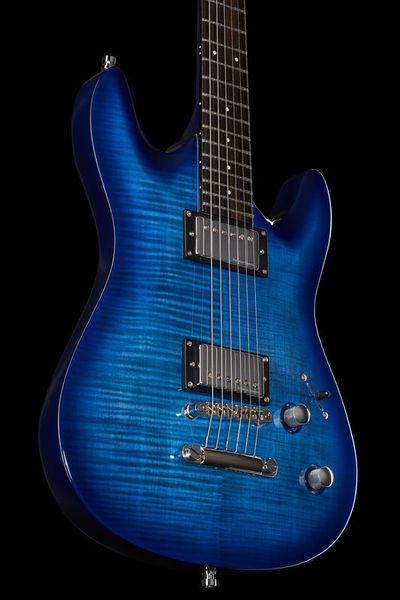
The Ibanez Jet King JTK2BS was the first one of the pair that I picked up, simply because I find it the most visually appealing. It has a whiff of Jazzmaster about it that I simply couldn't resist. But as both Jet Kings share the same electronics and pick-ups, your choice to purchase one or the other will ride on visual niceties, playability (the necks are different on each model) and the tonewoods used (mahogany or basswood).
After giving the instrument a quick look over I leant it against a chair to fetch my guitar strap. As soon as I let go the Jet King lurched to the left, forcing me to save it from falling. This is due to the top half of the body (above the sixth string) being heavier than the bottom half (below the first string). This in no way detracts from the playability of the guitar or your comfort when wearing it. But it's a lesson the Jet King newbie needs to learn, get a guitar stand !
Features of the Ibanez Jet King JTK2BS
Tuners - Six-in-line unbranded, sealed machine heads give smooth and accurate tuning that stays where it's put. Those of you with chubby fingers may find them a bit close together for comfort. If this is the case the sister Jet King JTK1BRS has a three-a-side headstock which might suit you better.
Headstock - This looks like a truncated Stratocaster headstock which compliments the body shape really nicely. Fender pretty much set the brand on this type of headstock and straying too far from their blueprint generally looks a bit naff. I think Ibanez have got the balance just right. The very chunky string guides with individual rollers are particularly appealing and fit in with the retro groove.
Nut - The black plastic nut sits on a tongue that protrudes from the rosewood fingerboard. This a great way of seating the nut, ensuring consistency across the production line, a quality sometimes missing in mid-priced instruments. On the model I had there was evidence of some light polishing on the fingerboard behind the first fret. I suspect this was to remove a small blemish either during factory set-up or the subsequent quality check at the Ibanez hub. Either way it is nice to know that they apply such particular quality control before they ship the box.
Neck - This is a bolt-on maple affair, the four bolts being offset on the body in a style reminiscent of some Godin guitars. The neck is quite chunky in the hand but not uncomfortably so, probably suiting the dynamic of the most likely users (see below). The finish is of the "sanded" smooth, matt variety, a very comfortable, dry feel next to your palm.
Fretboard - Pleasingly smooth rosewood with a natural finish. As new it feels slightly dry and the sweat from your hand shows as damp on the surface. If you're used to a lacquered fretboard it always takes a few minutes to get used to a natural feel, particularly on a previously un-played instrument. Again, I find a natural finish improves over time with use. The fret-markers are an unusual shape in an unusual position; half-diamonds inset along the edge of the fretboard under the sixth string. Although designed primarily to enhance the retro vibe, they are actually more visible (and therefore more useful) to the player whilst standing.
Frets - Described by Ibanez as Medium, I found them a little high for dazzling solo runs. But this isn't a Death Metal guitar and Shredders aren't invited. After ten minutes of noodling I had acclimatised and was playing all my favourite stuff with comfort.
Action - Ibanez actually check the setup in this country after import before they trans-ship to music shops. I generally find factory setups erring on the high side, but having passed through the Ibanez tech, this guitar had a medium low, comfortable action straight out of the box.
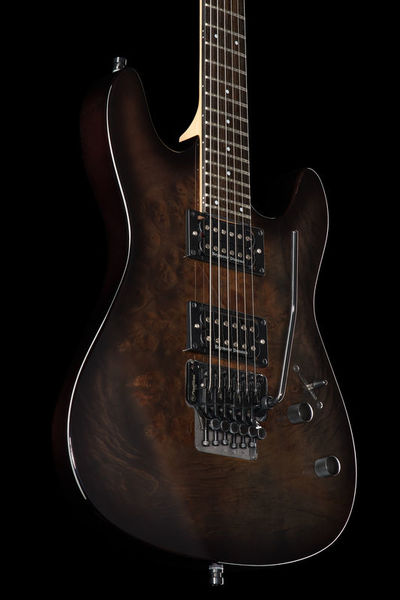
Body - A flat slab of mahogany that is nicely balanced on the strap but has a mind of its own when you lean it against the wall. The contoured edges are a concession to modernity but do work well, both visually and in terms of playing comfort. The weight of the instrument is reassuringly solid without being too heavy to wear for prolonged periods. The echo of Jazzmaster is the sort of thing you'll like if you like that sort of thing. Access to the top two frets is limited.
Bridge - If Ibanez had been pedantic about the Jet King's retro styling the bridge would've been a fixed or floating blade affair. Thankfully the need for playability has won the day and both Jet Kings sport a fully adjustable Gibson-type floating bridge. The flamboyance returns with offset tailpiece that you'll either love or hate. I think it harmonises well with the body therefore balances the look of the guitar. Through-body stringing completes the set-up down here at the ball-end.
Pickups - Again the retro vibe would have demanded nice skinny single-coils, but here we're presented with two fat Les-Paul-look-a-like Humbuckers. They are actually Ibanez Super 58's, the same as those found on the Ibanez Artist guitars. Suddenly the Jet King begins to look like a Wolf in Foxy clothing. The Gods of retro are appeased by the provision of individual coil-taps.
Controls - Basic volume and tone controls with a three-way pickup selector are situated on the lower body. The volume control is nicely placed, not too close to the strings (it always takes me 20 minutes to get used to playing a Strat). Some might say the pick-up selector would be better placed in the traditional Les Paul position on the upper bout but it worked perfectly well for me where it is.
The coil-taps have been given the full retro Monty. The pickups are tapped individually using rocker switches placed on the lower bout. These certainly feel unfamiliar in the context of the normal guitar playing experience, but in reality are no more difficult to operate than the taps that are built into tone or volume knobs. There is no visual indicator to say which way is which and the switches might be difficult to see on a dark stage. You would have to evaluate how many times you might want to tap a coil whilst in mid-flow and how rocker switches would impact on that.Pickguard - The brown tortoiseshell effect of the split pickguard gives the Jet King JTK2BS a large dollop of retro class, enhanced by the Jet King moniker engraved on the upper bout. You either like this Burns-style frippery or you don't. Me? I love it.
Strap-buttons - Fat and very secure.
Output Jack - Situated on the lower edge in a small, oval chrome plate.
Finish - I could find no flaws in the finish. This is a nicely constructed and handsomely finished instrument.
Sound of the Ibanez Jet King JTK2BS
The look of the Jet King leads you to expect that single-coil jangle even though your eyes are seeing big fat humbuckers. As luck would have it the taps were on single-coil when I plugged it up to a Line 6 Spider and I was soon jangling through "indie" chord progressions. Using the "Clean" and "Crunch" channels on the Spider I was able to find a wide variety of highly usable pop and rock sounds as well as the retro jangle that so suits the look of the Jet King.
Switching to the humbuckers made the Jet King reveal its Dark Side. In no time I was squeezing out syrupy blues tones from the neck pickup and classic rock crunch from the bridge pickup. The combination of pickup selector and coil-taps gives the widest range of tones. One slight drawback is the noticeable drop in output when the humbucker is tapped to single coil. With only one master volume there's no scope for on-board tweaking. If Ibanez were to build in a volume control for each pickup the already massive tonal range available from this instrument would be even wider.
Overall Impressions of the Ibanez Jet King JTK2BS
I wasn't surprised that I like the Jet King, I have a thing for vintage and retro guitars. However liking the look of an instrument is only the beginning. Having strapped on and plugged up the Jet King I still like it. It's not the natural choice for a hard rock lead guitarist, the neck profile is more suited to chordal work and occasional soloing, but in truth the tonal variety is there for almost anything you might want to play.
So much of the guitar buying equation is based on the looks of the instrument in question. The Jet King is distinctive and fits in with the current fashion for retro styling. But with that look comes great playability and wide tonal capabilities. For the price it's a great buy for the guitarist with enough flair to wear it.
Buy the Ibanez Jet King JTK2BS
Jet King JTK1BRS reviewed by The Man in the Jar
It was a couple of days after the above review before I was able to give the sister Jet King my full attention. By this time I was lucky enough to get a Flextone III to run the trial. My experience with the Jet King 2 led me to expect good things. And good things there certainly were....
Features of the Ibanez Jet King JTK1BRS
Tuners - Unbranded sealed tuners that worked well and smoothly. For this model Ibanez have chosen a three-a-side configuration which is offset. The offset is in the opposite direction to similar headstock designs. This adds a nice touch of individuality but it does mean you'll grab the key for second string when you're searching for the third string for at least the first week of ownership. The tuner knobs have a lovely vintage green feel, like they've been in your attic for ever.
Headstock - The compact modern style headstock is slightly at odds with the overall vintage feel, especially as it does splay back at quite an angle. But this guitar is not a reproduction and I welcome this mix of old vibes and new, improved build methods.
Nut - The nut is black plastic with tidy, accurate string grooves. It's not seated in the same way as on the JTK2 which possibly indicates this model comes from a different factory. In any event, tuning and intonation were spot on. Mid-priced guitars often fall down in this crucial area. Full marks to Ibanez for avoiding that pitfall.
Neck - As with the other Jet King the neck is bolt-on maple. Compared to her sister the JTK1 sports a slimmer neck of the same matt or "sanded" finish. I don't have large hands so this profile suited me better and consequently felt easier to play.
Fretboard - Plain, smooth rosewood finish with stylised markers. Here we have rectangular flashes running under the sixth string instead of the traditional dot markers. This is a modernistic, indeed almost art deco styling which works really well. The markings look minimal to the audience but are right where the player can see them. Very clever design!
Frets - These are the same profile as the JTK2, but due the the thinner neck profile it took less time for me to get used to them.
Action - Nicely set up out of the box with a medium low action. Again, the shallower neck profile will make the action feel easier for smaller hands.
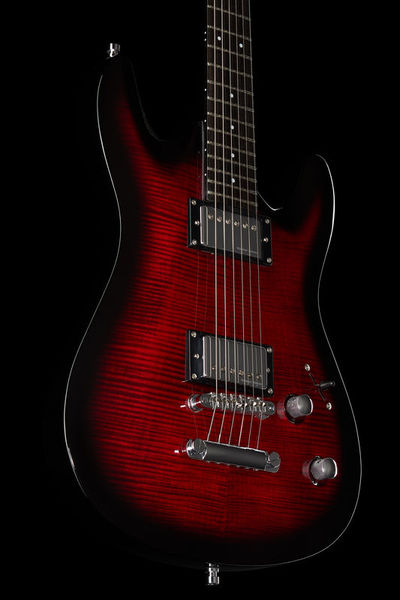
Body - Another slab body, this time of basswood. The grain is visible through the finish and is quite lovely. The finish is called black-red-sunburst. I feel it is better described as Burgundy (think of the wine in a large glass held up to the light) fading to Black. The body contouring is a modern feature and does work well making the guitar more comfortable to play. But the overall body shape, unlike the Jazzy feel of the JTK2, makes no concession to famous design. The shape of this body (and I mean only the shape, not the build quality) has faint echoes of "starter" guitars sold during the 60's from catalogues and chain stores. Strap it on today and it feels natural and right. It is lighter than its mahogany sister but still has a reassuring weight on the strap. One compromise to the vintage vibe you will have to accept is the restricted access to the top two frets.
Bridge - As with the JTK2 we have a fully modern, fully adjustable Gibson-style bridge. The tailpiece, less flamboyant than the JTK2, guides the strings down through the body to enhance response and sustain.
Pickups - Exactly the same as the JTK2, see comments above.
Controls - Exactly the same as the JTK2, see comments above.
Pickguard - This is a piece of retro-genius. The pickguard has a brushed aluminium finish formerly found exclusively on the control panels of TV sets that ran on valves. If you were really picky you might complain that the brushed finish of the pickguard clashed with the polished finish of the tailpiece. If that's the case I would suggest either getting a replica pickguard cut in a polished finish or taking some yoga classes to chill out a bit.
Strap-buttons - Adequate.
Input Jack - Situated on the lower edge in a small, oval chrome plate.
Finish - I could find no flaws in the finish. The translucent Burgundy finish on this model is lovely to behold.
Sound of the Ibanez Jet King JTK1BRS
The Flextone III has a selection of 32 digitally modelled vintage amplifiers available at the twist of a knob. I've found that the best way to approach such an Aladdin's Cave is to respect the characteristics, virtues and vices of the guitar that you are plugging up. As with the JTK2 I got the impression that tonally everything was there, the pickup selector and coil-taps offered all the sounds I needed. But I still felt strangely constrained by the retro character of the guitar. I explored with pleasure the Roland JC-120 "Jazz Clean" setting and the Fender '65 Twin Reverb model. These seemed to be the natural home of the Jet King. But with such a wide range of switchable pickup options I felt an exploration into heavy rock territory was more than justified. Setting the Jet King rockers to bridge humbucker and single coil at the neck I ventured into the Line 6 vintage Marshall models. I have to say that we all three had a great time!
Overall Impressions of the Ibanez Jet King JTK1BRS
Both Jet Kings are bigger and better guitars than their retro looks would have you expect. Young guitar players will not have the points of cultural reference that trouble the old sages amongst us and they'll play these things without the dubious limitations we tend to impose. The performance of the pickups, the versatility of the coil-taps and the sheer playability of these guitars makes them a must-try for anyone. The only possible deal-breaker will be the restricted upper fret access common to both models.
Buy the Ibanez Jet King JTK1BRS
Visit the iMuso Guitar Forum
Departments |
|---|
| Electric Guitars Bass Guitars Acoustic Guitars Guitar Amps Effects Pedals Keyboards Microphones PA Systems Mixing Desks Studio Software Accessories Books & DVDs Home |
Resources
Track
TNT Parcel Reviews
of Electric Guitars
Other
Equipment Reviews
Learning
Resources
Other
Shopping
Bands to See
Studios to
Use
Copyright Musik Produktiv MMV - Home of Electric Guitars Online