Electric Guitars Online

Set-up of a Floyd Rose or Floyd-Rose-Type Trem


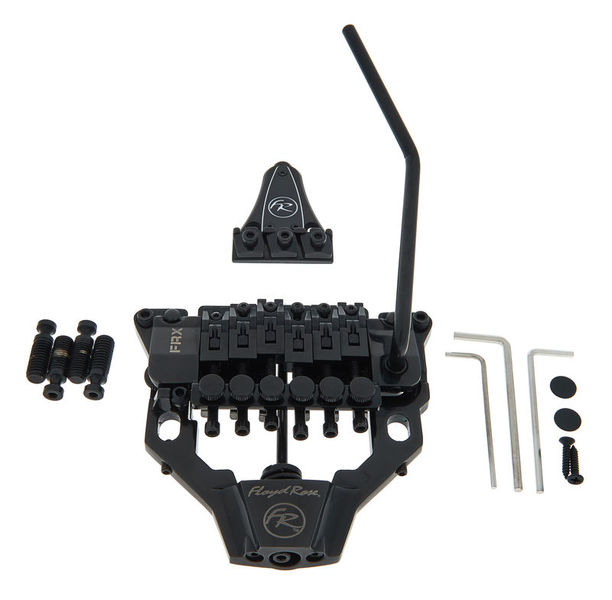
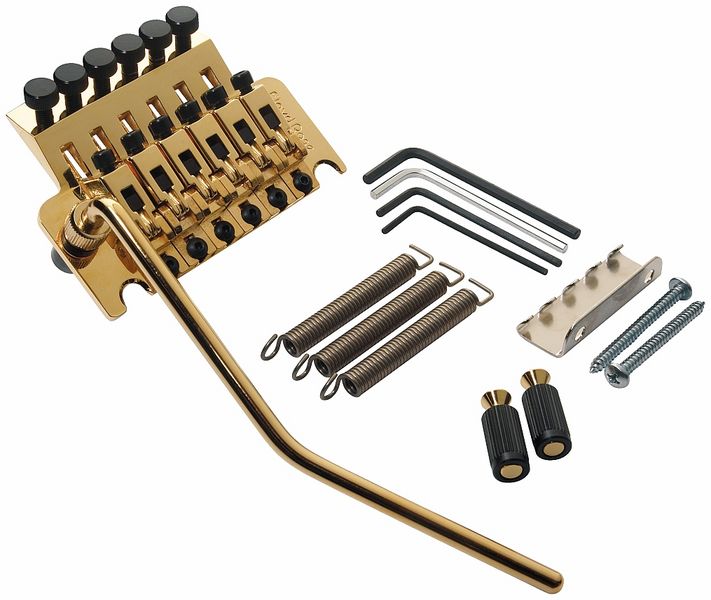
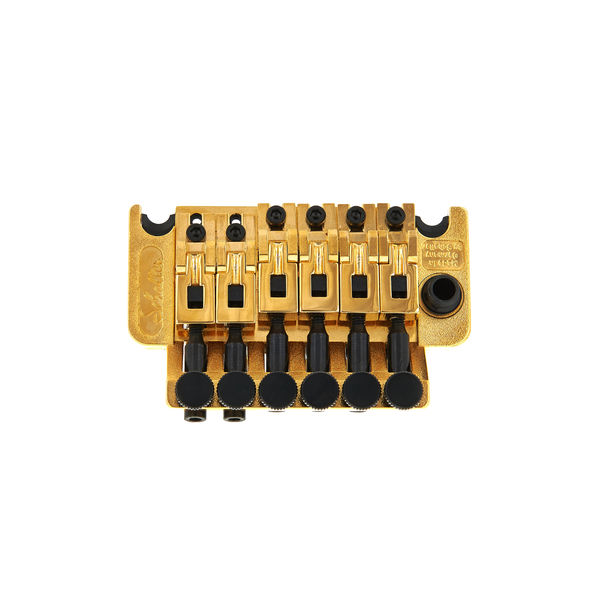
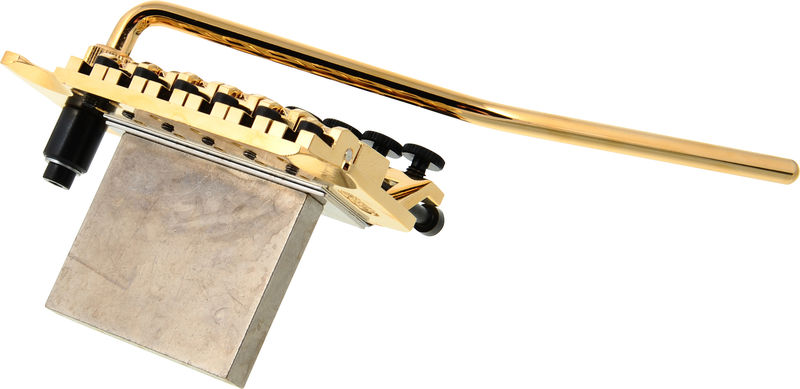
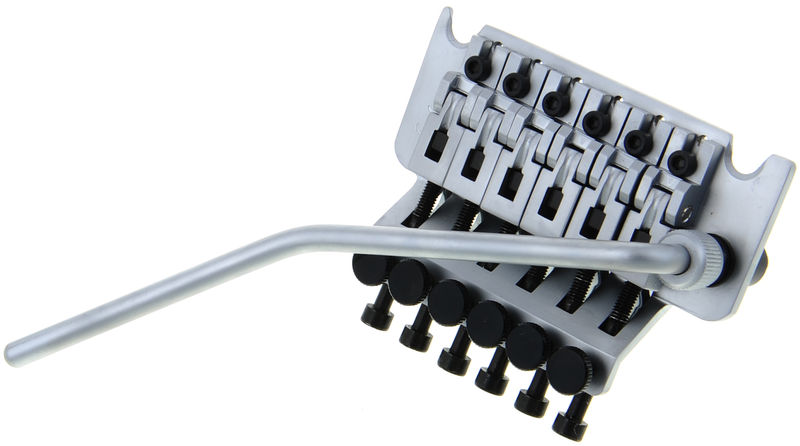
The Floyd Rose Trem (or vibrato to give it its proper name) is a device to allow extreme pitch changes on a six string guitar over and above that which is possible with normal playing techniques. The perennial problem it sets out to solve is the tendency of the strings to go out of tune when returned to their normal position. This detuning effect is generally caused by a combination of slippage of the strings at the machine head, sticking at the nut or string bush, movement at the bridge and the general basic instability of traditional tremolo or vibrato units.

Modern units are highly engineered to overcome these problems. The important thing to remember when setting them up is the need to achieve a balance between all the factors at play which creates the situation where the strings are allowed to retain their original pitch and tension when returned to their normal position. This process for the novice will often take up to one hour, but this time will reduce the more often you change your strings and acquire the new skills required.

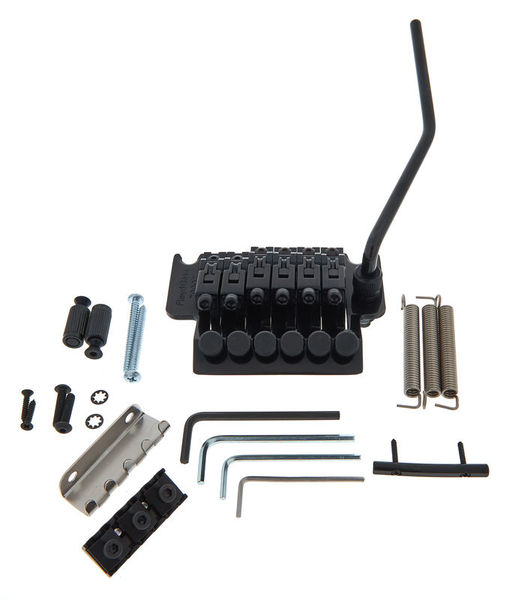
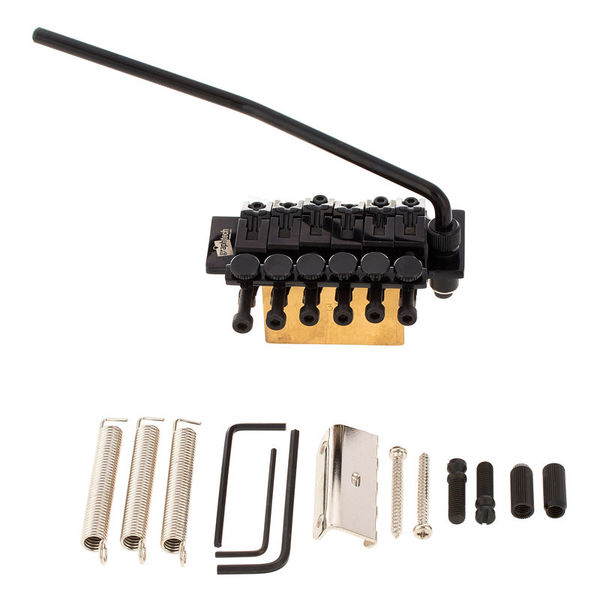
If you are at all nervous about tackling this procedure for the first time, take your instrument to a guitar technician and ask for a practical, step by step demonstration of the set-up technique. If you are confident enough to proceed yourself, make sure you read these instructions in full before you start and ensure you can clearly identify the various parts mentioned on your particular model of trem. As with all adjustments to a musical instrument, proceed with care.

First prepare the guitar:

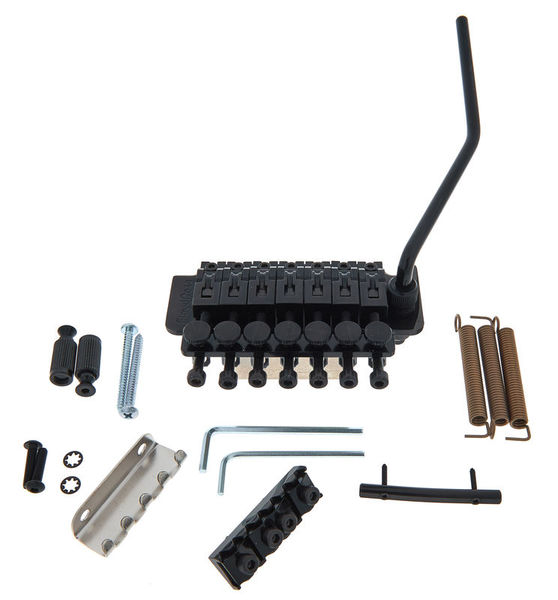
Look at the springs revealed in the back cavity of the guitar. These are attached to the body of the instrument by screws (normally two) that secure the claw onto which the springs are hooked. These screws complete the balance of tension on the instrument. The strings will pull in one direction which is countered by the springs pulling in the other. The tension on the strings will be dictated by the tuning you use and the gauge of strings you have fitted. Between these two variables string tension is a constant. So the only way to change the balance of the trem is by adjusting these screws.

Look at the screws again. They are your friends.

If your guitar is brand new from the factory and has had no further set-up it is highly likely that these screws will need to be tightened a turn or a turn-and-a-half at least before we can start to approach an in-tune instrument. So on brand new guitars I tighten these screws as a matter of course at the beginning to save time later.

Make sure you use a screwdriver that exactly fits the screws. Screwdriver slippage this close to the guitar's pristine sparkly finish does not produce attractive results.

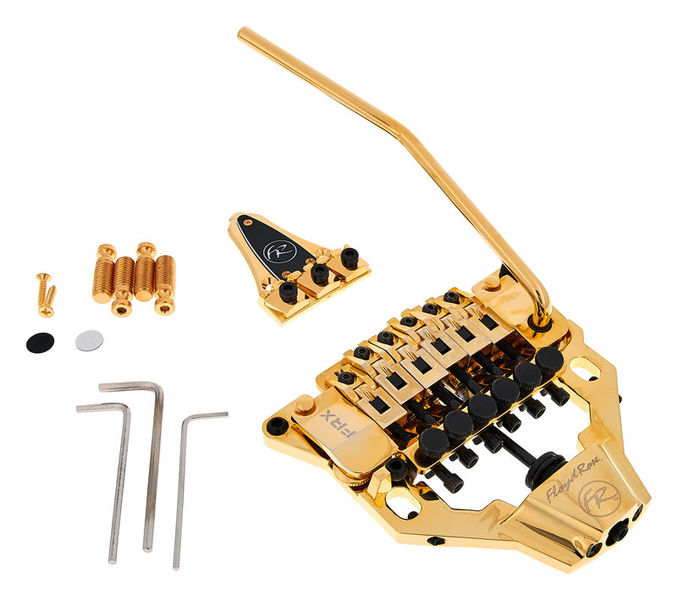
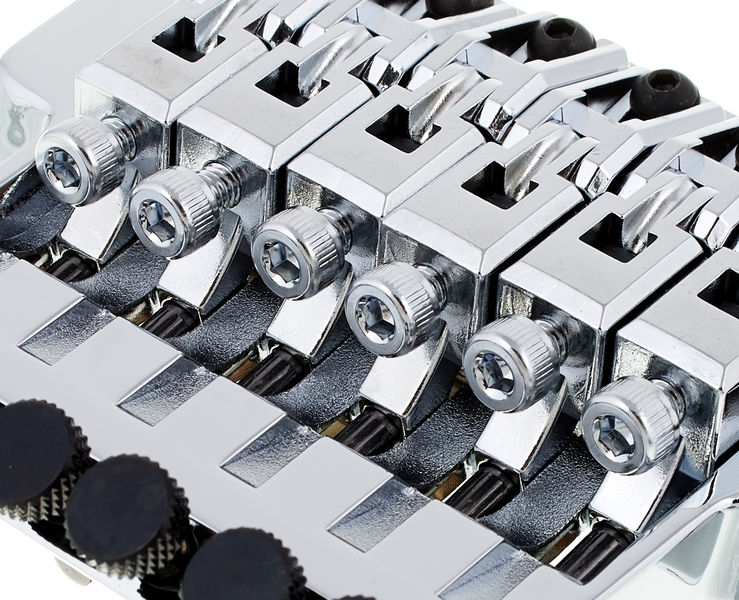
Next fit your strings. Part of the science of the Floyd Rose type of trem is to keep the strings securely locked in place to maintain a constant string length (and therefore a predictable tension). It is likely therefore that the bridge unit will incorporate a clamp for the ball-end of the string. Having removed the backplate this will be easier to sort out, but you may need a "third hand" to help the first few times that you change strings. Once all the strings are firmly anchored, turn the guitar over and attach the strings to the tuning heads in your preferred manner.

I like to have about three winds of each string on its capstan. Make sure as you tighten each string it is seated properly in its dedicated bridge saddle and nut slot. Don't try to tune the guitar at this point, simply put enough tension on each string to keep it in place and then move onto the next.

Once all the strings are fitted bring the guitar into a seated playing position and plug into your electronic tuner. Take a look at the trem unit. At this point it should be tilted backwards towards the tail of the guitar. This is desirable. It indicates that the pull on the springs is far greater that the tension on the un-tuned strings. Exactly what you'd expect.

Start to tune the strings from the 6th (low E) upwards. Don't be precious at this early stage, just get it into the ballpark and move on. When you finish at the 1st string (high E) you'll find that the rest of the strings are hopelessly detuned. But if you think about it, this is to be expected. As you've tuned each string in succession you've increased the sum total of tension applied by all the strings. This has tilted the bridge assembly towards the neck. This movement has released tension on the strings you've previously tuned so causing them to drop in pitch.

Congratulations, you've just reached the point where most people give up and think they've got a faulty guitar. Take my hand and let's move on...

Continue to tune in a cycle from 6th to 1st. Each time you will notice the amount of re-tuning required will decrease ever-so-slightly (this may take many tuning cycles and quite some time). You are now on your way to the Holy Grail of a balanced Floyd Rose trem.

As you approach closer and closer to stable tuning, keep checking the degree of tilt on the bridge against the level of the guitar's body. Ideally we are looking for a parallel trem unit. So if, as you approach stable tuning, the unit is tilting forward (to the neck), go to the screws in the back recess and tighten them slightly. If the unit is tilting backwards (towards the tail) then the screws need to be loosened slightly. You can see that judicious tweaking of the screws as you approach stable tuning will deliver a perfectly parallel unit. But again don't be too precious, near enough is good enough in most cases. (But whatever adjustment you make, always tighten or loosen these screws by the equal amounts to retain the lateral balance of tension in the vibrato unit.) 

Now the guitar is in tune, but we are far from finished yet. You must stretch the strings. All new strings need stretching after they've been taken to concert pitch for the first time. Lay the guitar on your lap, grab the 6th string between thumb and forefinger at the 12th fret and pull it away from the fretboard a few times. Do this with each string and retune. Repeat the stretch and retune procedure until stretching has no detuning effect.

Now you've got a balanced Floyd Rose trem that's in tune with properly stretched strings. Take a moment to congratulate yourself. 

The next step is to ever-so-very-slightly flatten (detune) each string. Remember we set the fine-tuners to have maximum "sharpening" ability. Detuning by a tiny degree will compensate for any small increase in tension caused by fitting the nut locks.

You ca now replace the back panel. It's unlikely you'll have to change the position of the screws again unless you start using a drop-tuning, open tuning or change the gauge of strings that you play. Now re-fit the nut locks, securely but not over-tight. It's a musical instrument remember, not a thumb-screw.

Once the nut locks are secure you must resist the all-too-natural temptation to reach for the machine heads. Absent minded tweaking of the tuning pegs now will break strings and may damage the guitar.

So, now we're set to do the final tuning using the fine-tuning screws at the bridge. There should be enough "sharpening slack" in these tuners to allow for tuning adjustments under normal conditions for the playable life of the strings. If for some reason this isn't the case (such as cold weather increasing the tension on the strings) then simply remove the locking nuts and reset the tuning balance as described above.

Back to Guitar Tips


The Man in the Jar (The guitar world's equivalent of Dr Nick Riviera).

All content Copyrighted.

Contact The Man in the Jar

 Electric Guitars   Bass Guitars   Acoustic Guitars   Guitar Amps   Effects Pedals   Keyboards 
Microphones   PA Systems   Mixing Desks   Studio Equipment   Music Software   Accessories 
Contact   FAQ   Home of Electric Guitars UK 


Reviews of Electric Guitars